


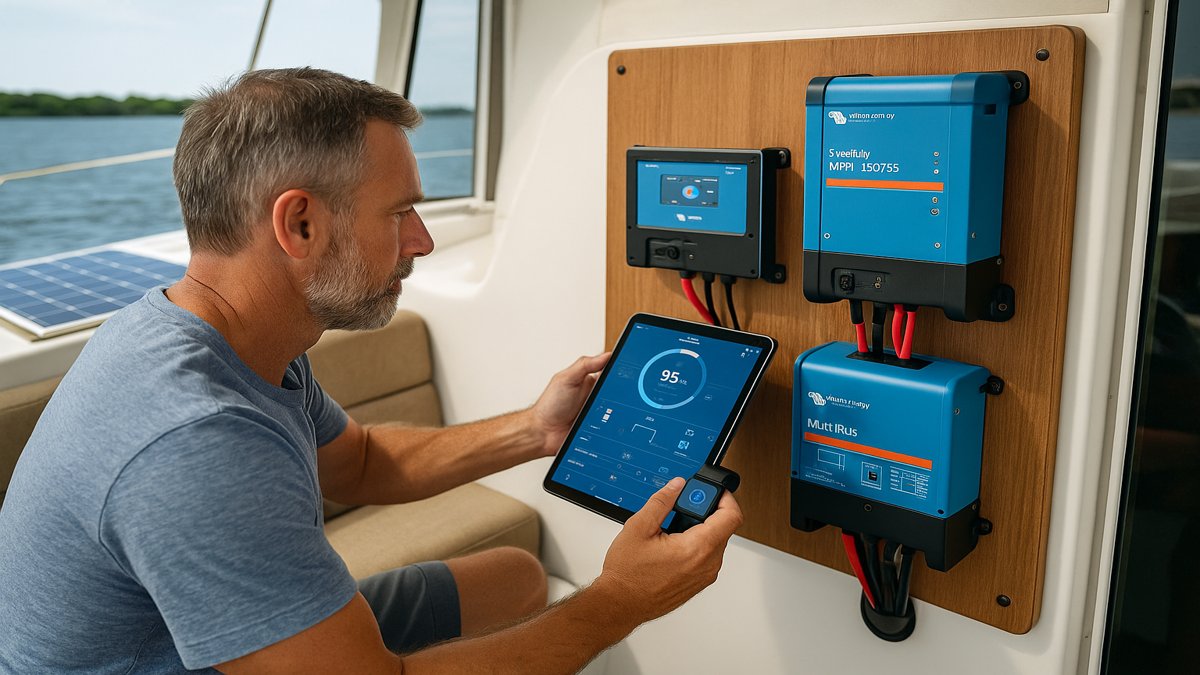
Maximizing Tax Credits and Government Incentives for Marine Solar Installation
Maximizing Tax Credits and Government Incentives for Marine Solar Installation
As the maritime industry continues to embrace sustainable energy solutions, boat owners considering marine solar installations in 2025 can benefit from various tax credits and government incentives designed to promote renewable energy adoption. Understanding and leveraging these financial opportunities is crucial for optimizing the return on investment in marine solar systems.
The federal Investment Tax Credit (ITC) remains a cornerstone incentive for marine solar installations, allowing vessel owners to claim up to 30% of their total system costs through 2032. This credit applies to both recreational and commercial vessels, provided they are primarily used in U.S. waters. To qualify, the solar installation must meet specific technical requirements and be completed by certified professionals.
In addition to federal incentives, many coastal states have implemented their own programs to encourage marine solar adoption. For instance, California’s Clean Vessel Initiative offers grants covering up to 40% of installation costs for commercial vessels that incorporate solar power systems. Similarly, Florida’s Maritime Green Energy Program provides low-interest financing options and additional tax rebates for boat owners who invest in renewable energy solutions.
Port authorities across the nation have also established local incentive programs to support the transition to cleaner marine energy. These programs often include expedited permitting processes, reduced docking fees for solar-equipped vessels, and technical assistance for system design and installation. Boat owners should consult with their local port authorities to identify available opportunities in their specific region.
For commercial vessel operators, accelerated depreciation benefits under the Modified Accelerated Cost Recovery System (MACRS) can significantly enhance the financial appeal of marine solar investments. This program allows businesses to depreciate their solar equipment over a shorter period, resulting in substantial tax savings during the initial years of operation.
To maximize these incentives, timing is crucial. Many programs operate on a first-come, first-served basis, and funding allocations may be limited. Boat owners should begin the application process well in advance of their planned installation date and maintain detailed documentation of all expenses and technical specifications.
Working with experienced marine solar installers who understand these incentive programs is essential. These professionals can help navigate the complex application requirements and ensure that installations meet all necessary criteria for qualification. They can also assist in bundling multiple incentives when possible, as some programs allow for simultaneous participation.
Environmental certifications can unlock additional financial benefits. Vessels achieving green certification standards through organizations like Clean Marina or Green Marine may qualify for supplementary grants and tax advantages. These certifications often require comprehensive documentation of environmental improvements, including solar power integration.
It’s important to note that incentive programs are subject to change, and new opportunities may emerge as governments continue to emphasize renewable energy adoption. Regular consultation with maritime tax specialists and renewable energy advisors can help boat owners stay informed about the latest available programs and ensure compliance with evolving requirements.
By thoroughly researching and strategically applying for available tax credits and incentives, boat owners can significantly reduce their initial investment costs and accelerate their return on investment in marine solar technology. This financial support, combined with the long-term operational savings from solar power, makes 2025 an opportune time to invest in marine solar installations.
Comparing Battery Storage Systems for Optimal Solar Energy Management on Boats
Comparing Battery Storage Systems for Optimal Solar Energy Management on Boats
In the realm of marine solar installations, selecting the appropriate battery storage system is crucial for maximizing return on investment and ensuring reliable power availability. As we approach 2025, boat owners are presented with several advanced battery technologies, each offering distinct advantages for marine applications.
Lithium-ion batteries have emerged as the leading choice for marine solar systems, primarily due to their superior energy density and longer lifecycle. These batteries typically offer 3000-5000 cycles at 80% depth of discharge, significantly outperforming traditional alternatives. Moreover, their compact size and lighter weight make them particularly suitable for marine installations where space and weight considerations are paramount.
Moving beyond standard lithium-ion options, Lithium Iron Phosphate (LiFePO4) batteries have gained considerable traction in the marine sector. These systems offer enhanced safety features and thermal stability, crucial factors for maritime environments. Although slightly lower in energy density compared to traditional lithium-ion batteries, their longer lifespan and improved safety characteristics often justify the trade-off.
Advanced Gel batteries represent another viable option, particularly for boat owners operating on more modest budgets. While these systems cannot match the cycle life of lithium-based solutions, they offer reliable performance and require minimal maintenance. Their ability to withstand deep cycling and resistance to vibration makes them well-suited for marine applications, especially in smaller vessels.
When evaluating battery storage systems, capacity sizing becomes a critical consideration. For optimal solar energy management, the battery bank should be sized to store 1.5 to 2 times the daily energy consumption of the vessel. This oversizing helps account for consecutive days of limited sunlight and ensures reliable power availability during extended cruising periods.
Temperature management represents another crucial factor in battery system selection. Marine environments often expose storage systems to extreme conditions, making thermal regulation essential. Modern lithium-based systems typically incorporate built-in battery management systems (BMS) that monitor and regulate temperature, voltage, and current levels, ensuring optimal performance and longevity.
Integration capabilities with existing marine systems should also influence the selection process. Contemporary battery storage solutions often feature sophisticated monitoring systems that can interface with vessel management platforms, providing real-time data on power consumption, charging status, and system health. This integration enables more efficient energy management and predictive maintenance scheduling.
Cost considerations extend beyond initial purchase prices to include installation requirements, maintenance needs, and expected lifespan. While lithium-based systems command higher upfront costs, their superior cycle life and reduced maintenance requirements often result in lower total ownership costs over time. A comprehensive cost-benefit analysis should account for these long-term factors when evaluating different storage solutions.
As marine solar technology continues to evolve, hybrid battery systems are gaining popularity. These configurations combine different battery technologies to leverage their respective advantages. For instance, pairing lithium-ion batteries for daily cycling with gel batteries for backup storage can provide an optimal balance of performance and reliability.
The selection of an appropriate battery storage system significantly impacts the overall effectiveness of marine solar installations. By carefully considering factors such as capacity requirements, environmental conditions, integration capabilities, and long-term costs, boat owners can make informed decisions that maximize their return on investment while ensuring reliable power availability for their maritime adventures.
Real-World Cost Analysis: Traditional Fuel vs. Marine Solar Power Through 2025
Investing in Marine Solar: Understanding the ROI for Boat Owners in 2025
Real-World Cost Analysis: Traditional Fuel vs. Marine Solar Power Through 2025
As marine fuel costs continue to rise and environmental concerns become increasingly pressing, boat owners are seeking alternative power solutions for their vessels. A comprehensive analysis of traditional fuel costs versus marine solar power investments reveals compelling financial implications for the 2025 market landscape.
Current projections indicate that marine fuel prices will maintain their upward trajectory, with experts forecasting an average increase of 8-12% annually through 2025. For a typical 40-foot recreational vessel consuming approximately 1,800 gallons of fuel annually, owners can expect to spend between $9,000 and $12,000 on fuel alone in 2025, based on conservative price estimates of $5.00 to $6.50 per gallon.
In contrast, marine solar power systems have experienced significant cost reductions, with the average price per watt declining by 15% year over year. A complete solar installation for a similarly sized vessel, including high-efficiency panels, charge controllers, and battery storage systems, currently ranges from $15,000 to $25,000, depending on power requirements and system sophistication.
When analyzing the return on investment (ROI), it’s essential to consider both direct and indirect cost factors. Beyond fuel savings, solar-powered vessels benefit from reduced maintenance costs, as there are fewer moving parts to service compared to traditional engines. Industry data suggests maintenance savings of $800 to $1,200 annually for vessels primarily operating on solar power.
Insurance companies have also begun offering premium discounts for boats equipped with solar systems, recognizing their reduced environmental impact and lower operational risks. These discounts typically range from 5% to 15% of annual premiums, translating to additional savings of $200 to $600 per year for most boat owners.
The longevity of marine solar systems further enhances their financial appeal. Modern marine-grade solar panels come with 25-year warranties and maintain approximately 80% of their original efficiency after two decades of use. This durability contrasts sharply with traditional marine engines, which often require significant overhauls or replacement after 10-15 years of regular use.
Taking these factors into account, the break-even point for a marine solar investment in 2025 is projected to occur between 4 and 6 years after installation, depending on usage patterns and system size. This calculation assumes average fuel savings of $6,000 annually, maintenance cost reductions of $1,000 per year, and insurance savings of $400 annually.
Government incentives and environmental regulations are expected to further improve the financial proposition of marine solar power through 2025. Several coastal states have already implemented tax credits for renewable marine energy systems, ranging from 20% to 30% of the installation cost, effectively reducing the initial investment and accelerating the ROI timeline.
For boat owners considering the transition to solar power, it’s crucial to note that hybrid solutions often provide the most practical and cost-effective approach. By maintaining a smaller traditional engine for backup power while relying primarily on solar energy, owners can optimize their power systems while ensuring reliable operation under all conditions. This hybrid approach typically reduces the initial investment by 20-30% compared to full solar conversion while still capturing 60-70% of the potential cost savings.
