


Jake Archer’s diagnostics experience gained in the automotive industry, working with luxury vehicles, has unexpectedly led to him being in demand on the water.
Marine power installations can get complicated – combining AC and DC power distribution; battery charging from multiple sources: generators, alternator, solar; connections to shore power (of variable quality); together with the need to take care of special-case grounding in a way which also prevents galvanic corrosion.
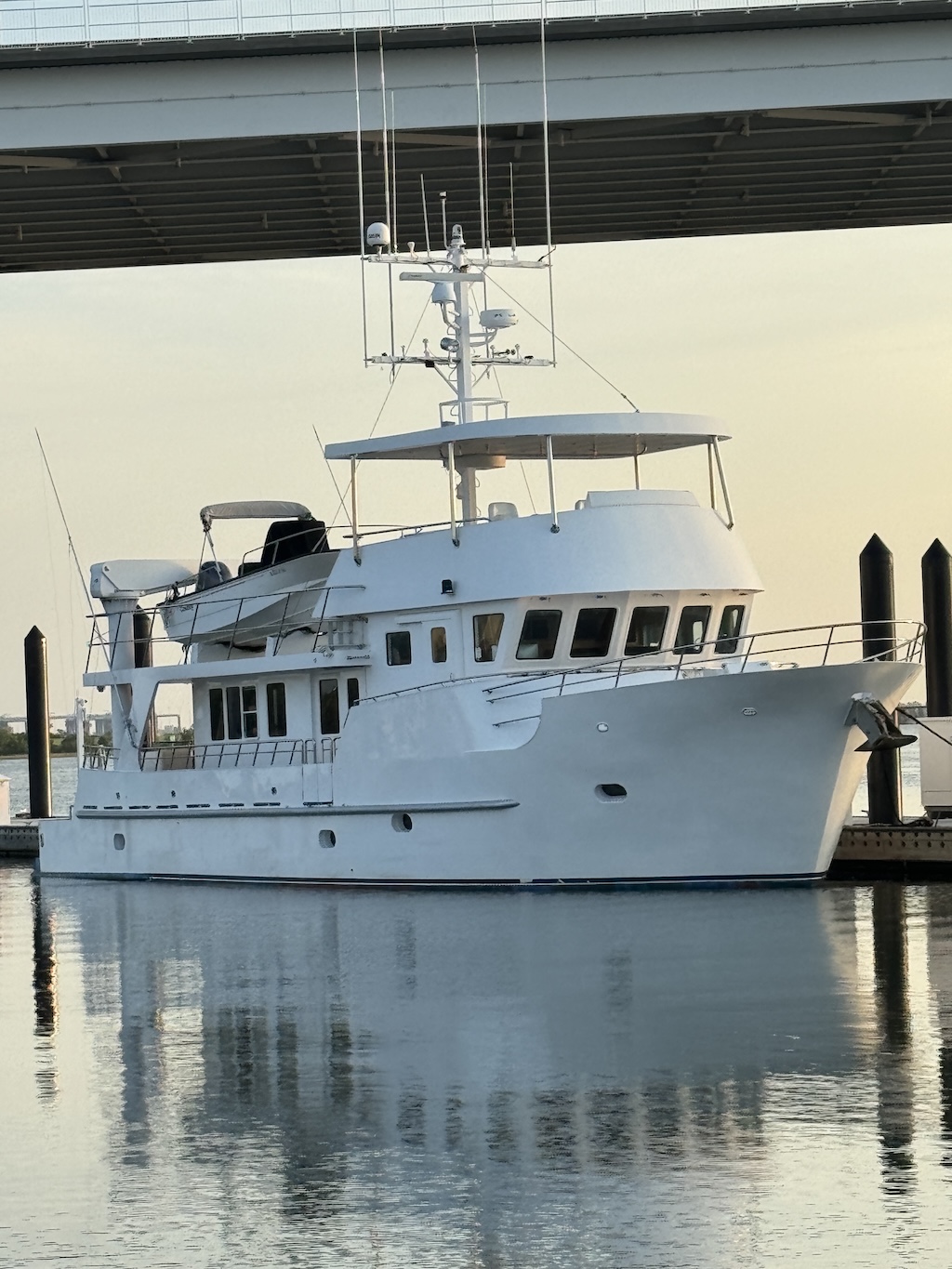
Cowboy is a 74 foot steel-hulled luxury motor vessel with a working-boat pedigree. Built for long-range exploration it’s packed with industrial-grade marine equipment including a Cummins 440hp diesel engine, two power generators, electric steering, and nine tanks holding thousands of gallons of fuel, fresh water, black water – all of which need to be fluid balanced to keep the vessel in trim.
Jake and his team at Marine Diagnostic Services based in New Bern, North Carolina, were invited on board to take a look at a recent power installation in which the inverters, battery, and generator were not communicating properly. They’d been installed by engineers who wanted to achieve a good result for the owner, but couldn’t.
Subsequent interventions had also failed to achieve an automated power system. Instead, top quality devices had been installed with no unified goal, resulting in frequent power dropouts; lots of ‘if this happens then do that…‘ manual interventions; together with unexplained power anomalies.
Boat owner Jim Price [Headline image, centre] also experienced battery storage limitations well below his requirement; and the manual switching was keeping him on his toes running from one end of the boat to the other. In short, the fun went out of boating.
New Insight
Jake’s analytical approach – checking voltages, strain testing, thermal imaging and simply tugging on cables to see if they were properly crimped – revealed the boats problems one by one. There were quite a few.
Rebuilding the system would take a while, but the result would be the difference between night and day.
Installation as-built
Taking a bird’s eye view, the boat’s power supply had not been designed or installed with an overall unifying vision. Its various parts didn’t work together. Inverter installation was incomplete – there were four 24V 5000VA inverters mounted on the wall, but only two were actually connected, and those hadn’t been correctly configured. Cable lengths were inconsistent, which is a major issue in paralleled inverter systems.
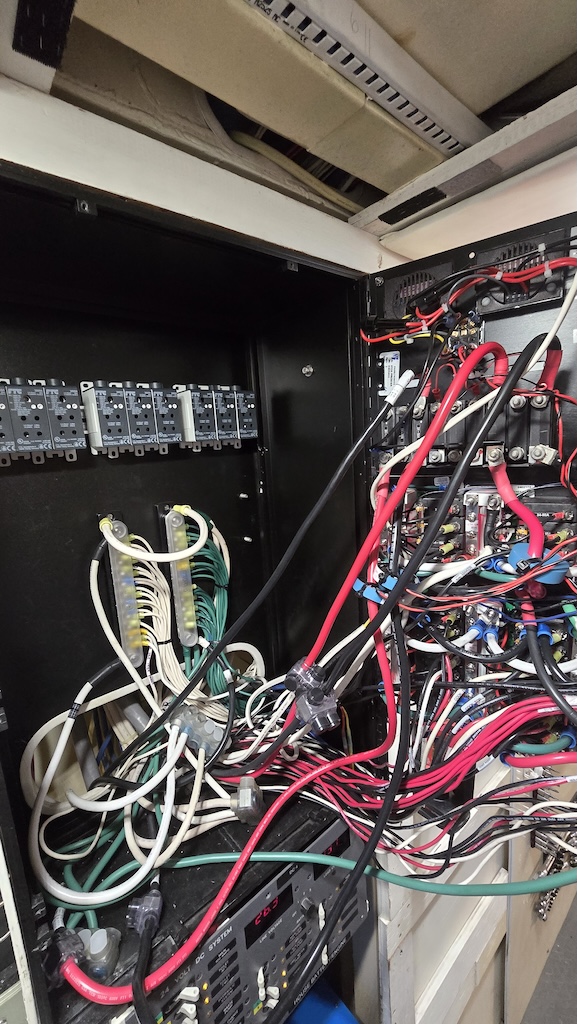
*Some of the original wiring in the cabinet as new work began.
